

How to Use Natural Metabolic Support for Injury Recovery
Last Updated: October 25, 2026
Quick Summary
Natural metabolic support for injury recovery means eating enough total energy and protein to fuel tissue repair while keeping protein high even as activity drops. Spread 20-30 g of high-quality protein across meals, add omega-3s and key micronutrients, and treat supplements as support after the diet is fixed.
- Healing has three overlapping phases: acute days 1-7, tissue rebuilding weeks 2-6, and return to activity week 6 and beyond.
- Rehabilitation guidance commonly cites about 1.2 to 2.0 grams of protein per kilogram of body weight daily for injured adults.
- Aim for 20-30 g of high-quality protein at each main meal plus a 15-25 g snack after rehab sessions.
- Keep protein steady when training volume drops, and adjust carbohydrates and fats to match activity.
- Replace roughly 16-24 oz of fluid per pound lost after longer sessions.
Table of Contents
- Why Injury Recovery Resets Your Metabolism
- Nutrition for Injury Recovery: The Four Pillars
- Foods That Help Heal Injuries
- Protein for Injury Recovery: How Much and When
- Supplements for Muscle Injury Recovery: Evidence and Safety
- A Staged Recovery Nutrition Plan
- Tracking Recovery: What to Measure
- Build Your Metabolic Support Plan with ROOTSOPHY
- Frequently Asked Questions
Why Injury Recovery Resets Your Metabolism
A sprained ankle or torn muscle does more than sideline you. According to a review in Nutrients on rehabilitation nutrition, the healing process demands extra energy and nutrients, and your metabolism shifts to meet that demand.
That shift matters for anyone using natural metabolic support for injury recovery. Healing tissue needs fuel. If you cut calories to avoid weight gain while you sit out, you slow the repair.
How Energy Needs Shift After Injury
Injured tissue burns more calories than most people expect. The body redirects energy toward tissue repair, inflammation control, and rebuilding muscle. A 2021 Nutrients review notes that adequate total energy intake is a key strategy during rehabilitation.
Here's the catch. Activity drops, appetite often drops with it, and many people eat less right when they need more. That gap is where muscle loss and stalled healing start.
- Healing tissue needs steady fuel
- Low calorie intake slows tissue repair
- Muscle loss raises the risk of re-injury
Nutrition for Injury Recovery: The Four Pillars
Nutrition for injury recovery rests on four pillars: enough energy, enough protein, the right fats, and key micronutrients with proper hydration. Miss any one and the others work less well. The Defense Health Agency treats nutrition as central to healing and rehabilitation, not an afterthought.
Pillar 1: Adequate Energy Intake
Adequate energy intake means eating enough to cover healing without a big surplus. The 2021 review above lists it as a core nutritional strategy for injured athletes. Undereating is the more common mistake.
Pillar 2: Protein and Amino Acids
Protein supplies the amino acids that rebuild tissue. A 2023 Nutrients review names a high-protein, carbohydrate-rich diet as a strategy that may benefit rehabilitation. Spread protein across meals rather than loading it at dinner.
Pillar 3: Healthy Fats and Omega-3s
Omega-3 fatty acids, found in fish oil and seafood, support the body's inflammation response. Balance matters: keep omega-6 fats in check and favor healthy fats from fish, nuts, and olive oil.
Pillar 4: Micronutrients and Hydration
Vitamin C, vitamin D, calcium, and collagen support tissue repair. Magnesium and potassium help with muscle function. Pair these with steady hydration and electrolytes, especially if you sweat during rehab work.
Foods That Help Heal Injuries
Foods that help heal injuries are mostly whole, nutrient-dense foods. Build meals around protein, color, and healthy fat.
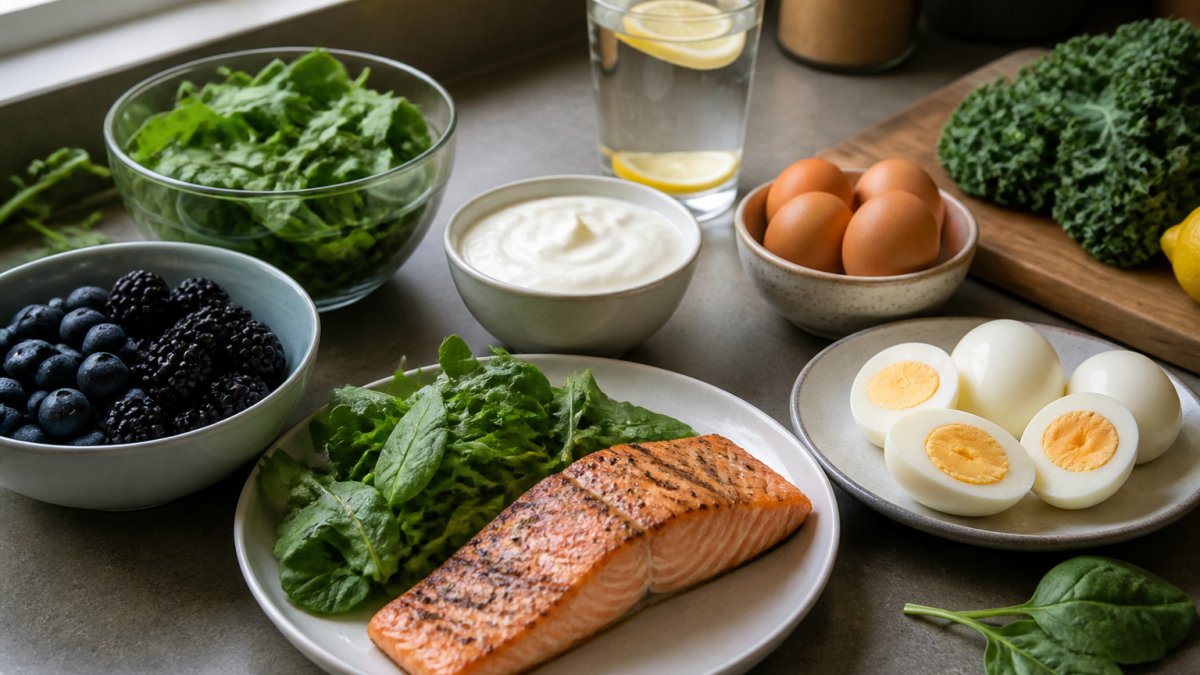
- Protein: eggs, poultry, lean meat, soy, low-fat dairy, seafood
- Omega-3s: salmon, sardines, walnuts, flaxseed
- Phytonutrients: dark berries, leafy greens, bright vegetables
A common mistake is chasing one "healing food" and ignoring the plate. Variety does more than any single item.
Protein for Injury Recovery: How Much and When
Protein for injury recovery matters more than most people think, and both amount and timing count. Injured tissue needs a steady supply of amino acids, and the body cannot store them for later. That is why spreading protein across the day beats one large serving at night.
How Much Protein Do You Need?
General rehabilitation nutrition guidance commonly cites a range of about 1.2 to 2.0 grams of protein per kilogram of body weight per day for injured adults, with higher ends used when the injury is severe or when muscle loss is a concern.
| Body Weight | Daily Protein Range (1.2-2.0 g/kg) |
|---|---|
| 130 lb (59 kg) | 71-118 g |
| 160 lb (73 kg) | 87-145 g |
| 190 lb (86 kg) | 103-172 g |
| 220 lb (100 kg) | 120-200 g |
These are starting ranges, not prescriptions. Needs rise with the size of the injury, the amount of muscle involved, and any pre-existing muscle loss. Needs may be lower in people with kidney disease, so clinician guidance matters.
When to Eat Protein
A common pattern that practitioners recommend is 20-30 g of high-quality protein at each main meal, plus a 15-25 g protein snack after rehab sessions. That distribution keeps amino acids available through the day rather than spiking once.
| Meal | Protein Source | Approximate Protein | Why It Helps |
|---|---|---|---|
| Breakfast | 2 eggs + 1 cup Greek yogurt | 25-30 g | Early amino acids after overnight fast |
| Lunch | 4 oz poultry or tofu | 25-30 g | Steady muscle support |
| Dinner | 4-5 oz seafood or lean meat | 25-35 g | Overnight tissue repair |
| Snack | 1 cup cottage cheese or a shake | 15-25 g | Closes daily protein gaps |
How Needs Change With Injury and Activity
When training volume drops, total calorie needs fall but protein needs often stay high or rise, because the body is repairing tissue while muscle is underused. A common mistake is cutting protein along with calories. Keep protein steady and adjust carbohydrates and fats to match activity.
- Severe injury or surgery: lean toward the higher end of the range and prioritize protein at every meal.
- Reduced training: keep protein high even as total food intake drops.
- Older adults: aim toward the higher end, since muscle maintenance is harder with age.
The exact amount depends on your body weight, injury, and activity. Ask a registered dietitian for a personal target, especially if you have a medical condition that affects protein tolerance.
Supplements for Muscle Injury Recovery: Evidence and Safety
Supplements for muscle injury recovery can help, but they are support, not the main event. The 2020 Nutrients review describes BCAAs including leucine, creatine, and omega-3 fatty acids as possible additions.
That order matters. Fix the diet first. Then consider supplements.
- Creatine: studied for muscle support during rehab
- Omega-3 fish oil: supports the inflammation response
- Leucine and BCAAs: amino acids for tissue repair
Watch out: supplements are not regulated the same way as drugs, so quality varies by brand. For help evaluating options, see this buying guide for natural metabolic support formulas.
A Staged Recovery Nutrition Plan
A staged plan beats a vague "eat healthy" instruction because healing needs change week by week. Match your food to the phase of healing, and use the ranges below as starting points to discuss with a registered dietitian. The numbers are grounded in widely used rehabilitation nutrition guidance, not in a single study.
Phase 1: Acute (Days 1-7)
Inflammation is high, appetite is often low, and energy needs are elevated. The priority is adequate total energy and protein, eaten in small frequent meals if a full plate feels like too much.
- Energy: aim to stay near your pre-injury intake rather than cutting calories to offset reduced activity. A common pattern is a 10-20% drop in food intake right when needs rise.
- Protein: spread 20-30 g of protein across 4-5 eating occasions. Easy options: Greek yogurt, eggs, cottage cheese, protein shakes, soft poultry, tofu.
- Fluids and electrolytes: sip water through the day; add an electrolyte drink if you are sweating in a cast, brace, or boot.
Sample day: breakfast of Greek yogurt with berries; mid-morning protein shake; lunch of chicken and rice; afternoon cottage cheese and fruit; dinner of salmon with roasted vegetables; evening glass of milk.
Phase 2: Rehabilitation (Weeks 2-6)
As you add movement and physical therapy, add carbohydrates for recovery fuel and keep protein high. This is when tissue rebuilding accelerates.
- Energy: increase toward your activity-adjusted needs; do not stay in a deficit if you are doing daily rehab work.
- Protein: keep 20-30 g per meal and add a protein snack after rehab sessions.
- Carbohydrates: include a palm-sized portion of rice, potatoes, oats, or fruit at meals, and a carb-plus-protein snack within a couple of hours of rehab work.
Sample day: oatmeal with walnuts and berries; lunch of turkey, quinoa, and greens; post-rehab snack of chocolate milk or a banana with peanut butter; dinner of sardines or salmon with sweet potato and broccoli.
Phase 3: Return to Activity (Week 6+)
Match intake to your training load as activity climbs. Keep the protein habit and watch hydration as sweat losses return.
- Energy: scale food up with training volume; add a snack on higher-volume days.
- Protein: maintain 20-30 g per meal and a protein feed after training.
- Hydration: weigh yourself before and after longer sessions; replace roughly 16-24 oz of fluid per pound lost.
Tracking Recovery: What to Measure
Tracking turns guesswork into feedback. You do not need lab tests to start. Track a few simple markers weekly and adjust.
- Body weight and appetite changes
- Energy levels during rehab sessions
- Muscle soreness and healing rate
- Strength and range of motion
A common mistake is measuring only weight. For realistic timelines, see how long metabolic supplements take to show results. Healing shows up in energy, strength, and how you feel.
Build Your Metabolic Support Plan with ROOTSOPHY
Injury recovery rewards patience and steady nutrition, and that is where a plan pays off. Before committing, read is metabolic support worth the investment. ROOTSOPHY builds Metabolic Rewire™ formulas around Dyglofit®, a patented West African botanical extract that supports healthy GLP-1 levels for appetite control and weight management. The formulas are stimulant-free and backed by 6 human clinical trials and 10 peer-reviewed studies.
Frequently Asked Questions
What foods should I eat to help with injury recovery?
Build meals around protein (eggs, poultry, lean meat, fish, soy, low-fat dairy), colorful vegetables and dark berries for phytonutrients, and healthy fats from seafood, nuts, and olive oil. The 2020 Nutrients review emphasizes that an adequate, balanced diet is of utmost importance during recovery, with supplements as possible additions rather than replacements. Include carbohydrate-rich foods to fuel tissue repair and drink water with electrolytes throughout the day.
How much protein do you need while recovering from an injury?
A 2023 Nutrients review identifies a high-protein, carbohydrate-rich diet as a strategy that may benefit rehabilitation in injured athletes, though individual needs vary by body weight, injury type, and activity level. Spread protein across three to four meals rather than loading it into one. Good sources include eggs, poultry, lean meat, seafood, soy, and low-fat dairy. Ask a registered dietitian to set a target that fits your situation.
Can supplements help with injury recovery?
Some supplements, including creatine, BCAAs (leucine), and omega-3 fatty acids, are described in a 2020 Nutrients review as possible additions during rehabilitation. That same review states an adequate and balanced diet is of utmost importance, so supplements should not replace food. Check with your doctor before starting anything, especially if you take prescription medication or have a chronic condition.
How does injury affect metabolism and energy needs?
Injury and reduced activity change how your body uses energy. The 2021 Nutrients review identifies adequate total energy intake as a key nutritional strategy during rehabilitation. Eating too little can slow tissue repair and contribute to muscle loss, while eating appropriately supports the healing process. A registered dietitian can estimate your energy needs based on the injury, your weight, and how much activity you can still do.
Healing from an injury takes more than rest. It takes fuel your body can use, and appetite control so you do not swing from undereating to overeating. ROOTSOPHY supports that balance with Dyglofit®, stimulant-free formulas, and research-backed ingredients. Get started with ROOTSOPHY and build a metabolic support plan that works alongside your recovery.

