

Natural Appetite Suppressants for Weight Loss: What Works
Table of Contents
- How Natural Appetite Suppressants Work in the Body
- How to Reduce Food Noise Without Medication
- Fiber, Protein, and Whole Foods That Support Satiety
- Natural GLP-1 Support: Botanicals and Lifestyle Habits
- Dyglofit Benefits for Appetite Control and Weight Management
- Safety, Side Effects, and Drug Interactions
- Conclusion
- Frequently Asked Questions
Last Updated: September 17, 2026
How Natural Appetite Suppressants Work in the Body
Natural appetite suppressants for weight loss work by supporting the body's own hunger signals rather than overriding them. They act on hormones like ghrelin and leptin, slow how fast the stomach empties, and help steady blood sugar so cravings ease instead of spike. (Source: the U.S. Department of Health and Human Services)
At ROOTSOPHY, we approach appetite control as a metabolic issue, not a willpower problem. That matters because hunger is regulated by biology.
Ghrelin is the hormone that tells you to eat. Leptin signals fullness. When these fall out of balance, you feel hungry even after a full meal.
Key ways natural options support appetite regulation:
- Slowing gastric emptying so you feel full longer
- Supporting healthy GLP-1 levels, a hormone tied to satiety
- Steadying blood sugar to reduce crash-driven cravings
- Improving insulin sensitivity over time
Most people assume hunger is a discipline issue. In practice, hunger hormones drive most of it.
How to Reduce Food Noise Without Medication
Reducing food noise starts with understanding what it actually is. Food noise is the constant mental chatter about food, and it often has both metabolic and psychological roots. A supplement alone rarely silences it.
The psychological triggers of hunger are the angle most guides skip. Stress, boredom, poor sleep, and habit all push you to eat when you are not physically hungry.
A common mistake is treating every craving as a metabolic problem. Some are. Many are not.
To reduce food noise, try this approach:
- Eat protein and fiber at every meal to blunt blood sugar swings
- Pause and name the trigger before you eat (stress, boredom, habit)
- Keep high-satiety snacks visible and processed snacks out of reach
- Build a consistent sleep schedule, since poor sleep raises ghrelin
Fiber, Protein, and Whole Foods That Support Satiety
Fiber and protein are the two most reliable whole-food tools for satiety. Both slow digestion and trigger fullness signals, and both are far cheaper than any supplement.
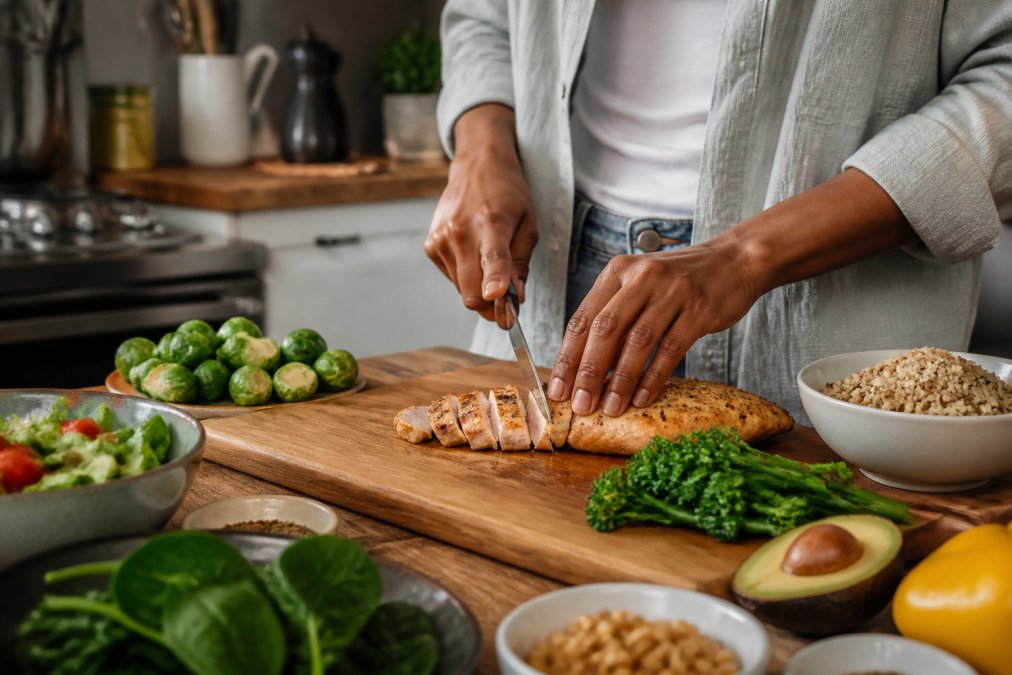
Nutrient density matters here. Whole grains, legumes, and vegetables deliver fiber with vitamins and minerals, while refined carbs deliver calories with little staying power.
Viscous Fiber and Gastric Emptying
Viscous fiber forms a gel in the gut that slows gastric emptying, so food stays in the stomach longer. That delay is what keeps you full between meals.
Good sources include oats, barley, beans, and chia seeds. Many people find that adding one fiber-rich food to breakfast reduces mid-morning snacking on its own.
Protein Intake and Hunger Hormones
Protein supports satiety through protein synthesis and by influencing hunger hormones directly. It also takes more energy to digest than fat or carbs, a small effect called thermogenesis.
Aim for a protein source at each meal: eggs, Greek yogurt, fish, poultry, or legumes. Spread it across the day rather than loading it all at dinner.
Natural GLP-1 Support: Botanicals and Lifestyle Habits
Natural GLP-1 support means helping your body release more of its own satiety hormone, not injecting a synthetic version. GLP-1 is released by L-cells in the lower gut in response to nutrients, then signals fullness to the brain and slows gastric emptying. Lifestyle habits do much of this work before any supplement enters the picture.
NIH overview of GLP-1 and appetite regulation
Habits that support natural GLP-1 release:
- Eat slowly and chew thoroughly to trigger gut hormone release
- Include fermented foods and fiber to support gut health
- Stay active, since regular movement improves insulin sensitivity
- Prioritize sleep, which affects hunger hormones
Botanical Extracts: What the Evidence Actually Shows
Most guides list ingredients without telling you how strong the evidence is or what dose was studied. Here is a more honest breakdown of the botanicals that appear most often in natural appetite suppressant products.
Glucomannan is a viscous soluble fiber from konjac root. It forms a gel in the stomach, slows gastric emptying, and has been studied at doses around 1 to 3 grams taken with water before meals. The main trade-off is tolerability: bloating and loose stools are common if you ramp up too fast, and it must be taken with a full glass of water because dry powder can swell in the throat.
Fenugreek seed extract contains galactomannan fiber and has been studied for its effect on appetite and blood sugar. Trials typically use a few hundred milligrams to a few grams per day. Effects on hunger are modest, and fenugreek can lower blood sugar, which matters if you take diabetes medication.
5-HTP is a precursor to serotonin, not a GLP-1 agent. It is included in appetite products because serotonin signaling influences mood and cravings, but the mechanism is different from gut-hormone satiety.
Herbal extracts are not automatically safe because they are natural. Some interact with medications, so check with a clinician before adding any supplement to your routine.
Dyglofit Benefits for Appetite Control and Weight Management
Dyglofit® is a patented West African botanical extract that supports healthy GLP-1 levels naturally. It is the active ingredient in ROOTSOPHY's Metabolic Rewire™ formulas, and it is backed by six human clinical trials and ten peer-reviewed studies.
Reported Dyglofit benefits include:
- Support for healthy weight management
- Appetite control that works with your body's own signals
- A stimulant-free formula, so no caffeine sensitivity issues
- Mental clarity in the Plus version, which adds citicoline
Option |
Key Feature |
Best For |
|---|---|---|
Base formula |
Stimulant-free Dyglofit® |
Appetite control alone |
Plus formula |
Dyglofit® + citicoline |
Appetite plus mental clarity |
Whole-food approach |
Fiber and protein |
Budget-friendly starting point |
Lifestyle habits |
Sleep, movement, slow eating |
Supporting any option above |
Safety, Side Effects, and Drug Interactions
Safety comes down to two things: what is in the product, and what else you take. Drug-supplement interactions are the most overlooked risk in this category, and most guides either skip them or wave at them in a single sentence. This section goes deeper.
FDA guidance on dietary supplements
Common Interactions to Know Before You Stack
If you take prescription medication, the interaction risk depends on the botanical. A few patterns come up repeatedly:
- Blood thinners (warfarin, apixaban, rivaroxaban): Fenugreek, garlic, ginkgo, and high-dose fish oil can add to bleeding risk or alter how the drug is metabolized. Any appetite product containing these should be cleared with your prescriber first.
- Diabetes medications (metformin, insulin, sulfonylureas): Berberine, fenugreek, and glucomannan can all lower blood sugar. Stacked with a glucose-lowering drug, the combination can push blood sugar too low.
- Blood pressure medications: Some botanicals, including green tea extracts at high doses, can affect blood pressure or heart rate. If you are on a beta-blocker or ACE inhibitor, review the label with your clinician.
- Thyroid medication (levothyroxine): Fiber-heavy supplements, including glucomannan, can bind levothyroxine in the gut and reduce absorption. Separate dosing by at least four hours, and confirm the timing with your prescriber.
- Antidepressants (SSRIs, MAOIs, SNRIs): 5-HTP and St. John's wort should not be combined with these without medical supervision because of serotonin syndrome risk.
- Stimulants (ADHD medications, some decongestants): Caffeine-containing appetite formulas can compound jitteriness, raise heart rate, and disrupt sleep.
GLP-1 Medications and Natural Supplements
If you are already taking a prescription GLP-1 medication such as semaglutide or tirzepatide, the calculus changes. These drugs already slow gastric emptying and reduce appetite. Adding a viscous fiber like glucomannan on top can worsen nausea, bloating, or constipation, which are already common side effects. The safer move is usually to focus on protein, hydration, and micronutrients rather than stacking another appetite-suppressing supplement.
Red Flags on the Label
Watch for these:
- Any product promising rapid, guaranteed results
- Blends that hide ingredient amounts behind a "proprietary blend"
- Stimulant-heavy formulas if you are sensitive to caffeine
- Products marketed for weight loss that do not list a manufacturer address or a phone number
- "Detox" or "cleanse" language, which is not a regulated claim
When to Talk to a Clinician First
A conversation with a healthcare professional is not optional if you are pregnant or breastfeeding, managing a chronic condition, taking any prescription medication, or under 18. It is also worth a call if you have a history of an eating disorder, since appetite-suppressing products can interact badly with recovery.
Conclusion
Managing appetite as you get older is harder when your metabolism has slowed and cravings feel constant. The good news is that the right combination of fiber, protein, sleep, and targeted botanical support can make a real difference.
Frequently Asked Questions
What is the most powerful natural appetite suppressant?
There is no single most powerful option. Viscous fiber like glucomannan, protein, and botanical extracts such as Dyglofit® each support satiety through different pathways. Clinical trials on Dyglofit® show up to 10.3% body fat reduction and 16.2% spontaneous calorie reduction. The most effective approach combines dietary fiber, adequate protein, and targeted natural GLP-1 support rather than relying on one ingredient.
How can I naturally manage food noise and cravings?
Reducing food noise starts with stabilizing blood sugar through balanced meals, prioritizing protein and fiber, and getting consistent sleep. Psychological triggers like stress and boredom also drive cravings, so identifying those patterns helps. Natural GLP-1 support from botanicals and lifestyle habits can further reduce the constant mental chatter around food. Small, repeatable changes tend to work better than drastic overhauls.
Are there natural alternatives to GLP-1 medications?
Some natural compounds and botanicals support the body's own GLP-1 production, though they work differently than prescription GLP-1 drugs. Dyglofit®, a patented West African botanical extract, has been studied in six human clinical trials for its role in supporting healthy GLP-1 levels. These natural options are not replacements for medical treatment, but they can complement a healthy diet and lifestyle. Always consult a healthcare professional before starting any supplement.
How do natural appetite suppressants work in the body?
Natural appetite suppressants work through several mechanisms: viscous fiber slows gastric emptying and increases satiety, protein influences hunger hormones like ghrelin and leptin, and certain botanicals support GLP-1 response. Caffeine and green tea extracts may also support metabolism and thermogenesis. The goal is to help regulate appetite signals so you feel full sooner and stay satisfied longer, making a caloric deficit easier to maintain.
