

How to Stop Sugar Cravings: 7 Proven Strategies
Table of Contents
- Why Am I Craving Sugar All the Time
- Build Balanced Meals to Stop Sugar Cravings
- Foods That Help With Sugar Cravings
- How to Stop Sugar Cravings at Night
- How Long Do Sugar Cravings Last and What to Expect
- Create a Real-Time Craving Response Plan
- Support Your Metabolism for Long-Term Success
- Frequently Asked Questions
Last Updated: October 12, 2026
Why Am I Craving Sugar All the Time
Sugar cravings hit hard, you feel fine one moment, then suddenly you need something sweet. This guide from ROOTSOPHY covers the real reasons behind constant sugar cravings and what to do about them.
Cravings aren't a character flaw, they're signals from your body. Your blood sugar might be crashing, your stress climbing, your sleep suffering, or your medications affecting hunger and fullness.
Blood Sugar Imbalance and Hunger Signals
When your blood sugar drops, your body demands fast energy, and sugar provides it instantly. This creates a cycle: eat sugar, blood sugar spikes, crashes, crave sugar again. Skipping meals or eating fast-digesting foods makes it worse.
Here's what happens:
- Skipped breakfast → blood sugar drops mid-morning → intense craving by 10 a.m.
- Lunch of white bread and deli meat → quick energy spike → crash by 2 p.m. → afternoon sweet craving
- Snacking on sugary items → temporary satisfaction → deeper crash later → stronger cravings tomorrow
Stable blood sugar means fewer cravings. Balanced meals with protein, fiber, and healthy fats keep energy steady and hunger signals reasonable.
Sleep, Stress, and Emotional Eating
Poor sleep changes how your brain processes hunger, when you're exhausted, your body craves quick energy, and sugar is the fastest option (pubmed.ncbi.nlm.nih.gov). Stress does something similar: high cortisol makes your body crave high-calorie foods, ancient survival programming that thinks you need fuel for a physical threat. Emotional eating is real too; many people reach for sweets when bored, anxious, or frustrated because sugar provides temporary comfort, not weakness, but how your nervous system tries to regulate itself.
Medication and Metabolic Factors
Some medications increase appetite or change how your body signals fullness, certain blood pressure medications, antidepressants, and corticosteroids can trigger cravings. Your metabolism also matters: as you age, blood sugar regulation declines and GLP-1 levels (the hormone that signals fullness) may drop, meaning stronger hunger and weaker fullness signals.
Build Balanced Meals to Stop Sugar Cravings
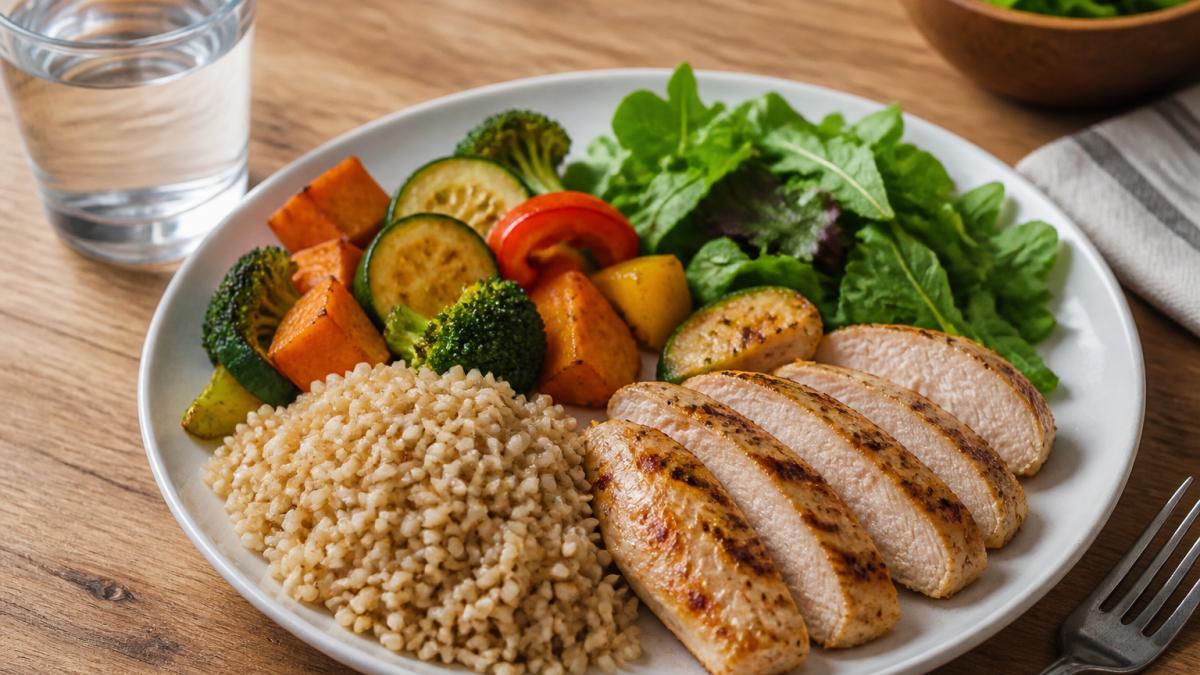
The fastest way to reduce sugar cravings is to stabilize your blood sugar with meals that keep your energy steady. A balanced meal has three components, protein, fiber, and healthy fat, which slow digestion and keep you full longer.
Protein and Satiety
Protein is your strongest tool against cravings: it digests slowly and signals fullness to your brain more effectively than any other macronutrient (pubmed.ncbi.nlm.nih.gov).
Aim for protein at every meal:
- Breakfast: eggs, Greek yogurt, cottage cheese, or lean meat
- Lunch: chicken, fish, tofu, beans, or lean beef
- Dinner: salmon, turkey, lean pork, or plant-based protein
How much? Roughly the size of your palm at each meal. Protein also stabilizes blood sugar and reduces craving intensity; research shows people who eat adequate protein report fewer food cravings overall.
Fiber and Whole Grains
Fiber slows digestion, keeps blood sugar from spiking and crashing, and feeds gut bacteria that influence hunger signals (pubmed.ncbi.nlm.nih.gov).
Choose whole grains over refined ones:
- Brown rice instead of white rice
- Whole wheat bread instead of white bread
- Oats instead of sugary cereal
Add fiber through vegetables and fruits too:
- Leafy greens at lunch and dinner
- Berries with breakfast
- Raw vegetables as snacks
Together, protein and fiber create stable energy, so you stay full longer and cravings weaken.
Meal Timing and Skipped Meals
Never skip meals thinking it will help you lose weight. Skipping backfires: you get hungrier later, cravings intensify, and you eat more overall.
Eat on a regular schedule:
- Breakfast within 2 hours of waking
- Lunch 4-5 hours after breakfast
- Dinner 4-5 hours after lunch
Regular meal timing trains your body: hunger signals become predictable, blood sugar stays stable, and cravings lose momentum.
Foods That Help With Sugar Cravings
Some foods naturally reduce cravings, satisfying your sweet tooth while stabilizing blood sugar.
Whole Foods and Natural Sweetness
Fruit contains natural sugars plus fiber, which slows absorption so blood sugar rises gently instead of spiking.
Best choices:
- Berries (blueberries, strawberries, raspberries)
- Apples
- Oranges
Nuts and seeds provide healthy fats and protein, satisfying cravings without the blood sugar crash: almonds, walnuts, pumpkin seeds, sunflower seeds, chia seeds. Dark chocolate (70% cacao or higher) contains compounds that improve mood and reduce cravings, a small piece satisfies the sweet craving without derailing your blood sugar.
Healthy Snack Planning
Plan snacks ahead. This prevents reaching for candy or cookies when cravings hit.
Easy snack combinations:
- Apple with almond butter
- Greek yogurt with berries
- Cheese with nuts
Keep these snacks visible and accessible. When a craving hits, grab your planned snack first. Often the craving passes once you eat something substantial.
How to Stop Sugar Cravings at Night
Evening cravings get blamed on weak willpower, but that explanation is wrong and makes the problem harder to fix. Night cravings usually come from one of four distinct drivers, each needing a different response, treating them all the same is why standard advice fails.
Identify Which Night Pattern You Have
Before you change anything, figure out which pattern fits you. The response is different for each.
Pattern 2: Blood sugar rebound. You ate a large, refined-carb-heavy dinner.
Pattern 3: Habit and cue-driven. You always have something sweet while watching TV, reading, or winding down.
Pattern 4: Stress and sleep debt. Cortisol stays elevated into the evening when you are stressed or short on sleep, driving appetite for high-calorie, high-sugar foods. This pattern is strongest on days after poor sleep.
Most people have a dominant pattern plus a secondary one.
Match the Response to the Pattern
- Undereating: Shift calories earlier. A protein-and-fiber breakfast and a real lunch often eliminate the 9 p.m. craving entirely within a week. This is the single highest-yield fix.
- Blood sugar rebound: Rebuild dinner around protein, fiber, and fat, and put the starch last. A dinner of 5-6 ounces of protein, 2-3 cups of vegetables, and a modest serving of a whole grain or starchy vegetable digests more slowly than a pasta-heavy meal.
- Habit and cue: Change the cue, not just the snack. Brush your teeth right after dinner, move your evening spot, or swap the ritual (herbal tea, a short walk) so the trigger no longer fires.
What the Evidence Actually Supports
The "wait 15 minutes and the craving passes" advice is widely repeated but weakly supported. Cravings do tend to peak and fade, but timing varies widely by person and trigger, some pass in minutes, others persist much longer. Waiting works best when the craving is cue-driven and poorly when you are genuinely underfed, which is why the pattern matters more than the clock.
A Realistic Evening Routine
- 5-6 p.m.: Eat a dinner with protein, fiber, and fat. Do not save most of your day's food for this meal.
- 7-8 p.m.: If you want something sweet, have a planned portion, a small square of dark chocolate or a bowl of berries, rather than grazing.
- 8-9 p.m.: Start the wind-down. Herbal tea, a walk, or a shower replaces the old cue.
When Night Cravings Are Not About Food
If evening cravings come with persistent fatigue, unusual thirst, frequent urination, or unexplained weight change, talk to a clinician rather than tweaking your dinner. The same is true if cravings started or intensified after a medication change, some medications, including certain antidepressants, corticosteroids, and some blood pressure drugs, affect appetite and blood sugar regulation.
How Long Do Sugar Cravings Last and What to Expect
A single craving typically lasts 10-20 minutes, which changes your strategy: you don't need willpower for hours, just to get through 15 minutes. Expect cravings to decrease over 2-4 weeks as your blood sugar stabilizes, the first week is hardest, by week two they usually ease, and by week four most people report significant improvement.
Create a Real-Time Craving Response Plan
Most craving advice covers weeks. Almost none covers the next 90 seconds. This section is a decision tree for the moment a craving hits, plus the daily routine that makes those moments rarer.
The 90-Second Decision Tree
When a craving hits, run this in order. Stop at the first step that resolves it.
Step 2, Drink 8-12 ounces of water. Thirst is frequently misread as hunger.
Step 3, Name the trigger. Is this hunger, habit, stress, boredom, or sleep debt?
Step 4, Respond by trigger:
- Hunger: Eat a planned snack with protein and fiber. Do not try to wait out genuine hunger, it usually intensifies.
- Habit/cue: Change your location or activity for 10 minutes. Cue-driven cravings weaken when the cue is interrupted.
- Stress: Use a 2-3 minute physiological reset, slow breathing, a short walk, or stretching. This targets the stress driver, not the food.
Step 5, If the craving persists after a real response, eat. Choose a planned option, portion it, sit down, and eat it slowly.
Build the Daily Routine That Prevents Cravings
The decision tree handles the moment; this routine reduces how often it arrives.
- Morning: Protein-forward breakfast within about two hours of waking. Eggs, Greek yogurt, cottage cheese, or lean meat plus a fiber source.
- Midday: A real lunch, protein, vegetables, and a whole grain. Avoid the white-bread-and-deli-meat pattern that spikes and crashes blood sugar.
- Afternoon: A planned snack if there is a long gap before dinner. Nuts, cheese, or yogurt with fruit.
Troubleshooting When the Plan Fails
- The craving wins anyway. Log it without judgment: time, trigger, what you ate. Patterns emerge within a week.
- You keep "starting over." Shrink the goal. One stable breakfast for a week beats a full overhaul you abandon by Wednesday.
- Cravings spike in week one. This is common as you cut back on added sugar. Expect a rough first week and improvement over the following two to four weeks. Occasional cravings after that are normal, not a relapse.
Track Progress Without a Scale
You do not need to count every gram of sugar. Two simple measures tell you whether the plan is working: how many cravings you had this week versus last week, and how many you responded to with a planned action rather than an automatic one. Both are more useful than a daily sugar tally, and neither requires an app.
Support Your Metabolism for Long-Term Success
Short-term strategies work, but long-term success requires supporting your metabolism itself.
This is where metabolic support matters. At ROOTSOPHY, we developed Metabolic Rewire to address exactly this issue.

The base formula keeps things simple: just Dyglofit at the research-backed dose, with no stimulants.
Combined with the strategies in this guide, metabolic support removes a major barrier.
Sugar cravings feel overwhelming when they hit. But they're manageable once you understand what's driving them.
Frequently Asked Questions
Why am I craving sugar all the time even when I eat regular meals?
Constant sugar cravings often signal blood sugar imbalance, inadequate protein or fiber intake, poor sleep, stress, or medication side effects. Skipped meals cause your body to seek quick energy, triggering intense cravings. Emotional eating also plays a role, many people reach for sugar during stress or boredom. If cravings persist despite balanced eating and good sleep, consult a healthcare provider to rule out metabolic issues or medication interactions.
What foods help curb sugar cravings most effectively?
Protein-rich foods like Greek yogurt, nuts, and eggs provide sustained satiety. High-fiber options including oats, lentils, and vegetables slow digestion and stabilize blood sugar. Whole fruits offer natural sweetness plus fiber. Nuts and seeds deliver healthy fats that increase fullness. Planned snacks of cheese with berries or hummus with vegetables work well. Drinking water before reaching for sweets also helps, thirst is often mistaken for hunger.
How can I stop sugar cravings at night without willpower alone?
Eat a balanced dinner with adequate protein and fiber 2-3 hours before bed to maintain stable blood sugar overnight. Stay hydrated, drink water if a craving hits, then wait 10-15 minutes. Remove tempting foods from your home so they're not visible. If stress or boredom triggers evening cravings, plan a non-food activity like walking, reading, or stretching. Supporting your metabolism with consistent sleep and stress management also reduces nighttime cravings significantly.
Can a supplement like Metabolic Rewire help reduce sugar cravings?
Metabolic Rewire uses Dyglofit®, a botanical extract that supports natural GLP-1 levels, the hormone signaling fullness to your brain. Clinical studies on Dyglofit® showed up to 294.7% increase in GLP-1 and a spontaneous 16.2% reduction in daily calorie intake. However, supplements work best alongside the strategies in this guide: balanced meals, hydration, sleep, and stress management. Results vary by individual, and the formulas were tested on overweight adults, so outcomes depend on your specific situation and consistency.
