

8 Reasons You Feel Hungry After Eating Protein
Last Updated: November 1, 2026
Quick Summary
You feel hungry after protein because protein's satiating effect is conditional: it depends on how much protein you habitually eat, whether your meal includes fiber and fat, and how much food volume you take in. A shake or a dry chicken breast with refined carbs can leave you hungry, while protein paired with vegetables, whole grains, and healthy fat keeps you fuller longer.
- Higher-protein meals can reduce hunger and increase post-meal fullness through appetite-related hormones like ghrelin.
- The more protein you already eat daily, the less extra fullness each additional gram delivers.
- Liquid calories empty from the stomach faster than solid food, so a shake alone gives a weak fullness signal.
- Build meals with a palm of protein, a fist of vegetables, a cupped hand of grains, and a thumb of fat.
- Aim for at least 25 to 30 grams of protein at a meal and check thirst, sleep, and habit before assuming hunger.
Table of Contents
- Why You Feel Hungry After Eating Protein
- How Protein Affects Hunger Hormones and Satiety
- Still Hungry After a Protein Shake? Liquid Calories and Food Volume
- Protein and Blood Sugar: Why a High-Protein Meal Can Still Leave You Hungry
- Foods That Keep You Full Longer Alongside Protein
- Building Balanced High-Protein Meals That Actually Satisfy
- A Checklist for Diagnosing Hunger After a Protein Meal
- Supporting Your Appetite Signals With Metabolic Rewire
- Frequently Asked Questions
Why You Feel Hungry After Eating Protein
You ate a protein-rich meal. You felt full for about an hour. Then the hunger came back. If that cycle sounds familiar, you are not imagining it, and you are not alone. Protein's effect on fullness is not a guarantee that every meal will keep you satisfied.
Here is the core problem: protein's effect on appetite is real, but it is conditional. It depends on how much you eat, what you eat with it, how you sleep, and your own biology. Appetite signals are a common area of study, and the same pattern is widely reported: people add protein, expect fullness, and get hunger instead.
Below, we break down eight reasons this happens and what to do about each one.
How Protein Affects Hunger Hormones and Satiety
Protein influences appetite through hormones, including ghrelin, the hormone that signals hunger, and satiety hormones that tell your brain you have had enough. Research on protein and appetite suggests that higher-protein meals can reduce hunger after eating and increase post-meal fullness, alongside changes in appetite-related hormones (The Effects of Consuming Frequent, Higher Protein Meals on Appetite and Satiety During...).
So the mechanism is real. But there is a catch. Protein's satiating effect may vary with how much protein a person habitually eats (pubmed.ncbi.nlm.nih.gov). In plain terms: the more protein you already eat every day, the less extra fullness each additional gram delivers.
If you have been on a high-protein diet for months, your body has adapted. That is one reason you feel hungry after protein when a newcomer to the same meal would feel stuffed.
For a deeper look at how satiety hormones work and how to support them naturally, see our guide on natural ways to increase GLP-1 levels.
Still Hungry After a Protein Shake? Liquid Calories and Food Volume
Feeling hungry after a protein shake is one of the most common complaints we hear, and the explanation is usually volume, not protein quality. A shake delivers protein in a small, liquid package. Liquid calories empty from the stomach faster than solid food, so the physical stretch signal that contributes to fullness is weak.
Protein source may matter for appetite, but a shake alone does not guarantee that you will stay full for hours.
Try these fixes:
- Add volume: blend in frozen berries, spinach, or ice to increase food volume
- Add fiber: a spoon of chia or ground flax slows digestion
- Pair it with solid food: a shake plus a boiled egg beats a shake alone
- Check your portion size: 20 grams of protein is not the same as 40
A shake is a tool, not a meal. Treat it like one.
Protein and Blood Sugar: Why a High-Protein Meal Can Still Leave You Hungry
A high-protein meal can still leave you hungry if it comes with refined carbohydrates or too little fiber. Protein does not cancel out a blood sugar spike and crash.
The reverse is also true. A meal built on protein, fiber, and whole grains tends to produce a slower rise and fall in blood sugar, which supports steadier appetite regulation. Fiber slows gastric emptying and blunts the post-meal glucose curve, so the energy from the meal arrives more gradually instead of all at once (The impact of soluble dietary fibre on gastric emptying, postprandial blood glucose and...).
Watch out: a "high-protein" label on a packaged snack can coexist with added sugar. Check the Nutrition Facts panel for total and added sugars before you trust the protein claim.
If sugar cravings are part of your hunger pattern, our guide on how to stop sugar cravings covers seven strategies that work alongside a protein-forward diet.
Foods That Keep You Full Longer Alongside Protein
Foods that keep you full longer share three traits: fiber, water content, and volume. Protein gets the headlines, but fiber does much of the quiet work. It slows digestion, adds bulk, and supports steadier energy intake.
Build meals around these:
- Vegetables: broccoli, peppers, zucchini, leafy greens
- Legumes: lentils, chickpeas, black beans
- Whole grains: oats, quinoa, barley
- Fruit: apples, pears, berries
- Healthy fats: avocado, olive oil, nuts
Fat also slows stomach emptying, which extends fullness. A dry chicken breast with nothing else is a recipe for hunger an hour later. The same chicken with roasted vegetables and olive oil behaves very differently.
If sugar cravings are part of your hunger pattern, our guide on how to stop sugar cravings covers seven strategies that work alongside a protein-forward diet.
Building Balanced High-Protein Meals That Actually Satisfy
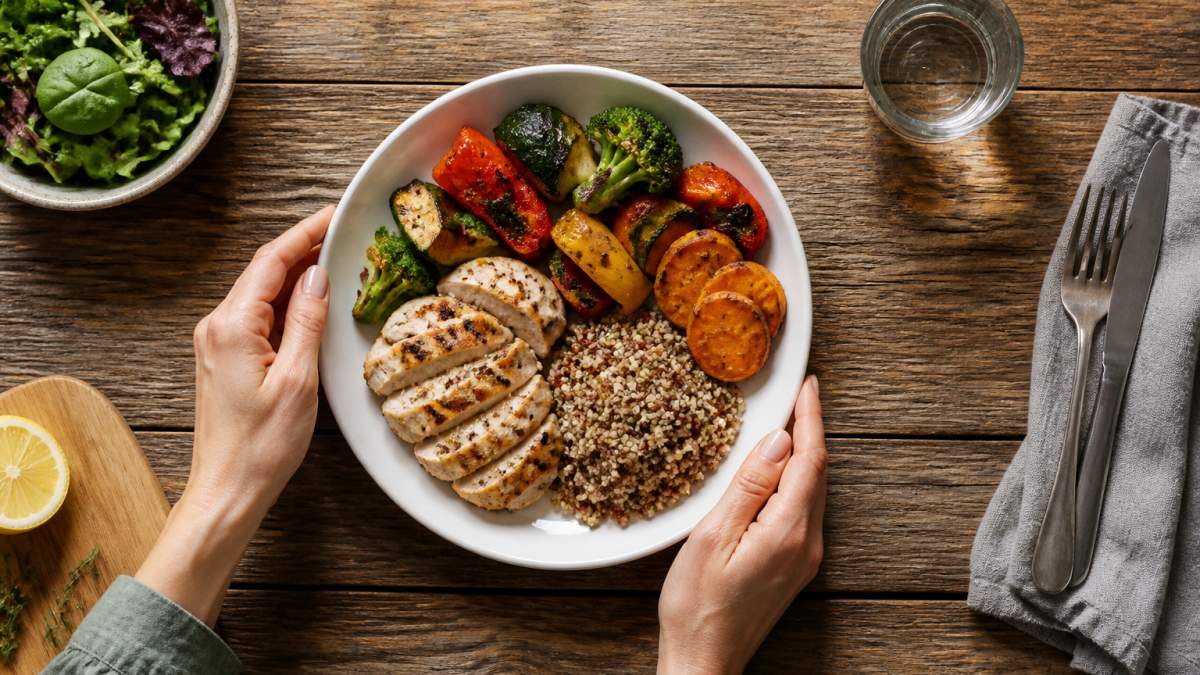
Balanced high-protein meals follow a simple ratio: a palm-sized portion of protein, a fist of vegetables, a cupped hand of whole grains or legumes, and a thumb of healthy fat. That structure covers meal composition without calorie counting.
Two examples:
- Lunch: grilled salmon, half a plate of roasted broccoli and peppers, half a cup of quinoa, olive oil drizzle
- Breakfast: three eggs, sautéed spinach, half an avocado, one slice of whole-grain toast
Compare that to a protein bar and coffee. Same protein number on paper, very different satiety in practice.
The difference between a protein-rich meal that satisfies and one that does not usually comes down to what shares the plate. Protein alone may not provide enough energy or volume to satisfy you, especially if the portion is small or the meal is missing fiber and fat.
A practical checklist for diagnosing hunger after a protein meal:
- Did I eat at least 25 to 30 grams of protein at this meal?
- Did the meal include fiber from vegetables, fruit, or whole grains?
- Was there a source of healthy fat?
- Did I drink water in the last two hours, or could this be thirst?
- Did I sleep poorly last night?
- Am I eating out of boredom, stress, or habit rather than physical hunger?
- Has this happened most days for more than two weeks?
Thirst and cravings can mimic physical hunger closely. Poor sleep is another hidden driver; our article on how poor sleep increases hunger explains the hormonal link. And if hunger shows up as constant food thoughts, our guide on how to reduce food noise naturally walks through seven proven steps.
If you answered yes to the last question, keep reading, and consider talking to a doctor.
A Checklist for Diagnosing Hunger After a Protein Meal
Use this checklist the next time you feel hungry after protein. Work through it in order.
- Did I eat at least 25 to 30 grams of protein at this meal?
- Did the meal include fiber from vegetables, fruit, or whole grains?
- Was there a source of healthy fat?
- Did I drink water in the last two hours, or could this be thirst?
- Did I sleep poorly last night?
- Am I eating out of boredom, stress, or habit rather than physical hunger?
- Has this happened most days for more than two weeks?
Thirst and cravings can mimic physical hunger closely. Poor sleep is another hidden driver; our article on how poor sleep increases hunger explains the hormonal link. And if hunger shows up as constant food thoughts, our guide on how to reduce food noise naturally walks through seven proven steps.
If you answered yes to the last question, keep reading, and consider talking to a doctor.
Run through these questions the next time hunger shows up after a protein meal.
| Check | What to ask |
|---|---|
| Protein amount | Did I eat at least 25 to 30 grams of protein? |
| Fiber | Did the meal include fiber from vegetables, fruit, or whole grains? |
| Healthy fat | Was there a source of healthy fat? |
| Hydration | Did I drink water in the last two hours, or could this be thirst? |
| Sleep | Did I sleep poorly last night? |
| Hunger type | Am I eating out of boredom, stress, or habit rather than physical hunger? |
| Duration | Has this happened most days for more than two weeks? |
Supporting Your Appetite Signals With Metabolic Rewire
Persistent hunger after protein can relate to appetite signals, and support for those signals may help. That is where Metabolic Rewire comes in. It uses Dyglofit®, a patented West African botanical extract studied for its effect on natural GLP-1 levels, the hormone that signals fullness to your brain.

In published research on Dyglofit® alone, natural GLP-1 levels, post-meal fullness, daily calorie intake, and body fat were studied, with results varying between individuals. These statements have not been evaluated by the Food and Drug Administration, and this product is not intended to diagnose, treat, cure, or prevent any disease.
The base formula is stimulant-free, and the Plus version adds citicoline for mental clarity. Pricing is listed on the product pages.
Frequently Asked Questions
Why do I still feel hungry after eating a high-protein meal?
Protein usually supports fullness, but it is not a guarantee. Higher-protein meals often reduce hunger after eating, yet the effect on later energy intake varies. If your meal is low in fiber or volume, or you ate too little overall, hunger can return quickly. Increased activity, changed eating habits, and blood-sugar shifts can also explain feeling hungrier on a high-protein diet.
Why am I hungry after drinking a protein shake?
Liquids empty from the stomach faster than solid food, so a shake often delivers less food volume and chewing than a meal. If you are still hungry after a protein shake, check the total calories, whether it contains fiber or whole-food ingredients, and how long it has been since your last meal. A shake alone rarely matches the fullness of a plate with protein, vegetables, and whole grains.
How does protein affect blood sugar?
Protein has a modest effect on blood sugar compared with refined carbohydrates. The bigger factor is usually what comes with the protein. A meal built on refined carbs and sugar can spike and then drop blood sugar, which may bring hunger back sooner. Pairing protein with fiber-rich carbohydrates and healthy fat supports steadier energy and a longer feeling of fullness.
When should I talk to a healthcare professional about persistent hunger?
Talk to a qualified professional if hunger persists despite balanced meals, comes with unexplained weight loss or gain, or interferes with daily life. Persistent hunger can reflect blood-sugar or hormonal changes, medication effects, or eating too little overall. A clinician can review your history and rule out medical causes. This article is general information and does not replace individual medical advice.
Hunger after a protein meal is a signal, not a failure. If balanced meals and better sleep habits still leave you battling appetite and food noise, our Metabolic Rewire formulas are built to support your body's natural GLP-1 response, with a stimulant-free formula and a Plus version for focus. Get started with ROOTSOPHY and give your appetite signals the support they were designed to have.

